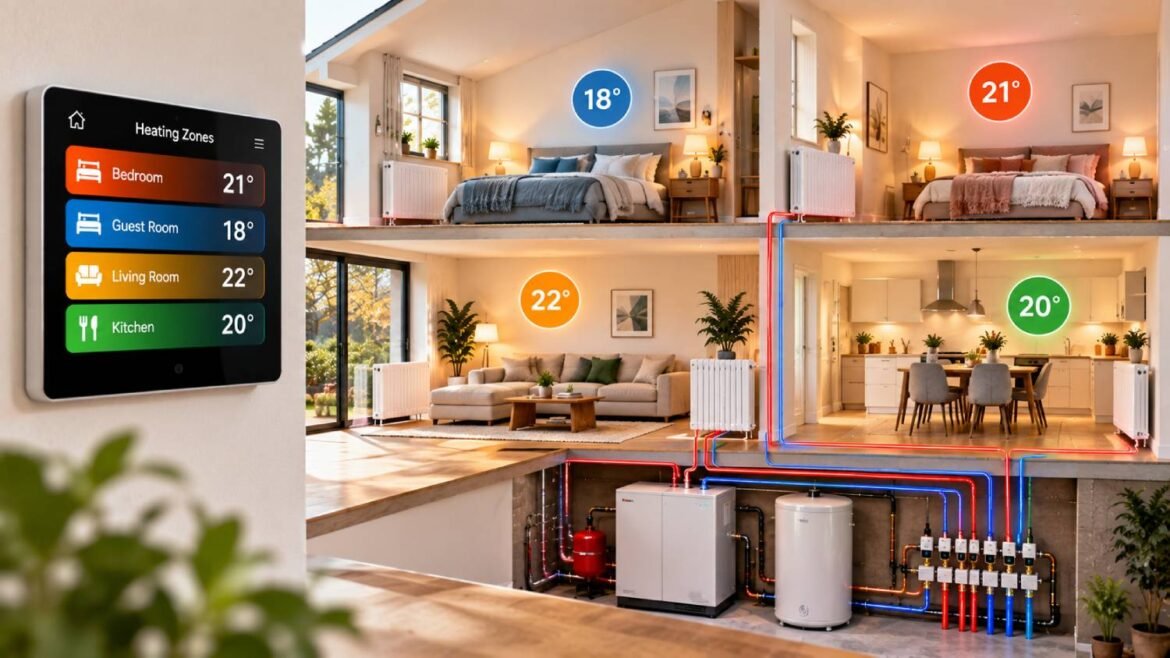

Keeping every room at a comfortable temperature can be difficult in homes where different areas have different heating needs. Bedrooms, living rooms, kitchens and other spaces may be used at different times of the day, and factors such as sunlight, insulation and room size can cause noticeable temperature differences. A heating system that treats the entire home as one space may not always provide the level of control homeowners want.
For homeowners considering trusted heating services for Riverside homes, it helps to understand how heating systems can be adapted for multiple temperature zones. Zoning can allow different parts of a home to be heated according to their individual needs, potentially improving comfort while giving homeowners more control over when and where heat is delivered.
What Is a Multi-Zone Heating System?
A multi-zone heating system divides a home into separate areas, or zones, that can have their own temperature settings. Instead of relying on one thermostat for the entire property, each zone can be controlled independently.
For example, a homeowner may want bedrooms slightly cooler at night while keeping the main living area warmer in the evening. A multi-zone setup can make this possible without requiring the same temperature throughout the entire home.
The exact approach depends on the existing heating equipment and the home’s layout. Some systems use multiple thermostats and duct dampers, while others may use separate heating equipment for different areas.
Why Temperature Differences Develop
Temperature variations can occur for many reasons. Rooms with large windows may gain more heat from sunlight, while spaces with limited insulation can lose heat more quickly.
Rooms located above garages, near exterior walls or at the end of a duct run may also experience different temperatures from the rest of the house. In larger properties, distance from the heating equipment can further affect how effectively warm air reaches certain areas.
Understanding these differences is useful when deciding whether zoning could improve comfort. The goal isn’t simply to create more thermostats, but to address genuine differences in how various parts of the home heat and cool.
Benefits of Separating Heating Zones
A properly designed zoning system can give homeowners greater control over their indoor environment.
- More personalised comfort: Different rooms can be maintained at temperatures that suit how they are used. This can be especially useful when household members have different comfort preferences.
- Better control over unused areas: Rooms that aren’t being used regularly may not need the same level of heating as occupied spaces. Zoning can allow homeowners to adjust temperatures without changing conditions throughout the entire home.
- Reduced temperature differences: A well-planned system can help address rooms that consistently feel colder or warmer than nearby spaces by directing heating where it is needed.
- Flexible schedules: Different zones can follow different schedules. Bedrooms, living areas and other spaces can be heated according to daily routines rather than all operating under one schedule.
- Potential energy savings: Reducing heating in areas that don’t need as much conditioning may lower energy use. Actual savings depend on the equipment, home and how the zoning system is operated.
Ductwork Plays an Important Role
For homes with central forced-air heating, zoning often relies on the duct system. Dampers can regulate how much heated air travels to different parts of the property.
However, the ductwork needs to be properly designed for this type of setup. Leaks, restrictions or poorly balanced ducts can make it difficult to maintain consistent temperatures even with zoning controls.
Before making changes, it’s useful to evaluate the existing ductwork. Addressing airflow problems first can sometimes improve comfort without requiring a completely new heating system.
Thermostat Placement Matters
Each temperature zone relies on accurate information from its thermostat or temperature sensor. Poor placement can lead to inaccurate readings and unnecessary heating cycles.
A thermostat located near a draft, direct sunlight, kitchen appliance or other heat source may not reflect the actual temperature of the room. This can cause the heating system to respond differently than expected.
Proper placement should therefore be considered when installing or modifying a multi-zone system. In some homes, remote sensors may also help provide a more accurate picture of conditions within a particular zone.
Zoning Doesn’t Fix Every Heating Problem
It’s worth remembering that temperature differences aren’t always caused by a lack of zoning. A dirty filter, blocked vent, faulty thermostat or ductwork problem can also create uneven heating.
Insulation is another factor. If one room loses heat much faster than the rest of the house because of poor insulation or air leakage, simply increasing the amount of heated air sent into that room may not solve the underlying issue.
A proper assessment can help determine whether zoning is appropriate or whether another part of the heating system or home needs attention first.
Choosing the Right Heating Approach
The best heating solution depends on the property. A smaller home with a straightforward layout may not need multiple zones, while a larger house with several distinct living areas may benefit from more precise temperature control.
Existing equipment, ductwork, insulation, room usage and household preferences should all be considered. It’s also worth thinking about future needs, especially if rooms are being renovated or the home’s layout is changing.
A professional can evaluate the property and explain which zoning options are compatible with the existing heating system.
Maintenance Keeps Zoned Systems Working Properly
Multi-zone systems contain additional controls and components that need to operate correctly. Regular maintenance can help identify problems with thermostats, dampers, airflow and heating equipment before they cause widespread comfort issues.
Homeowners should also pay attention to changes between zones. If one area suddenly becomes much colder or warmer than it used to be, that may indicate a problem rather than a normal difference in temperature.
Keeping filters clean and ensuring vents remain unobstructed can also support proper airflow throughout the home.
Think About Long-Term Comfort
A heating system should be able to accommodate the way a home is actually used. If certain rooms consistently need different temperatures, a single thermostat may not provide enough control.
Multi-zone heating can offer a practical way to manage these differences, but good design is essential. The equipment, controls, ductwork and insulation all need to work together.
Taking the time to assess the home before making changes can help homeowners choose a system that provides useful control without adding unnecessary complexity.
Final Thoughts
Homes with multiple temperature zones can benefit from a heating system designed around the way each area is used. Zoning can provide more control over individual rooms, help address temperature differences and allow homeowners to create heating schedules that better match their routines.
Before installing or modifying a zoned heating system, it’s worth looking at the entire property. Ductwork, insulation, thermostat placement, equipment capacity and existing heating problems can all affect the final result. With the right approach and regular maintenance, separate temperature zones can make it easier to keep different parts of the home comfortable throughout the heating season.